Product Overview
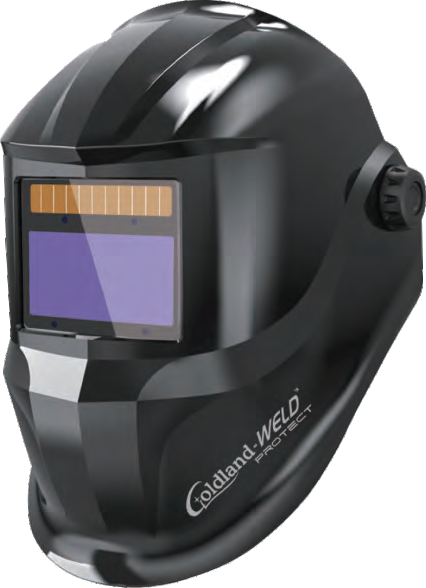
The WH15 is the auto darkening welding helmet Goldland builds for the working shift rather than for the catalogue photograph. We supply it to brand owners, importers, fabrication contractors and welding helmet suppliers who need one shell to cover MIG, stick and TIG work plus the grinding in between. The version on this product keeps a mid-size window, a clear light state for lining a joint up, and a shell light enough that welders leave it down through tacking and inspection instead of pushing it up every thirty seconds. One shell family, several filters
Every model in the series shares the same filter footprint and the same PA shell, so a distributor can carry two or three versions of the same helmet and still hold one set of spares. Who ends up wearing it
Most of these helmets leave us under someone else's brand, which is the usual pattern of work for welding helmet manufacturers who build to a customer's specification. A private-label owner puts their own colour and logo on the shell, an importer stocks it as the dependable mid-range model, and a contractor buys it in lots for crews who share equipment across shifts. What those buyers have in common is a welder who is under the helmet for most of the day, and that is the case this helmet was shaped around.
Shell & Lens Construction
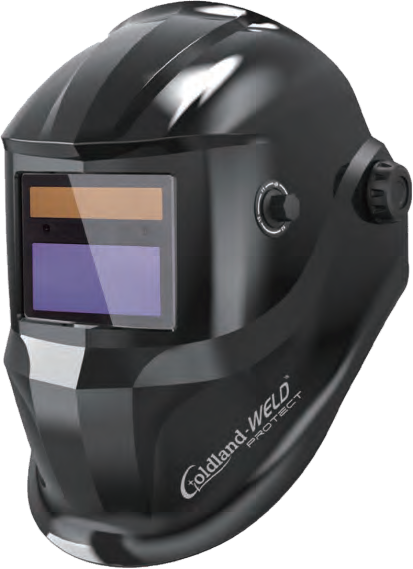
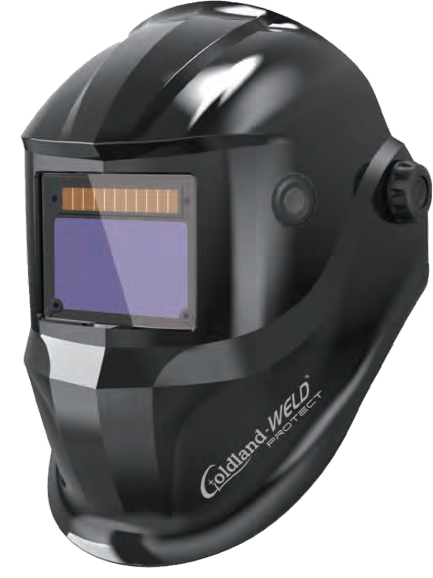
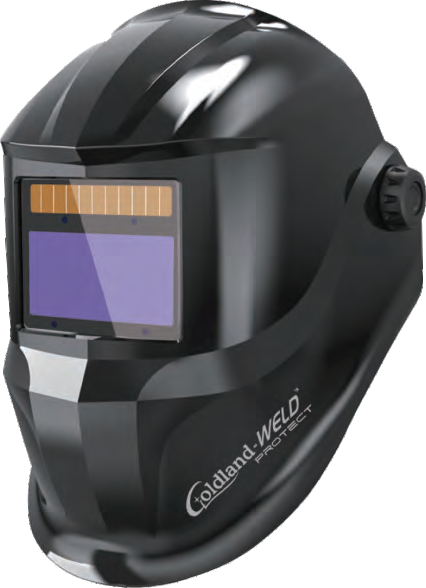
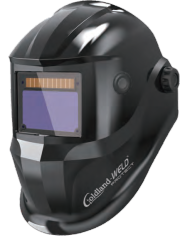
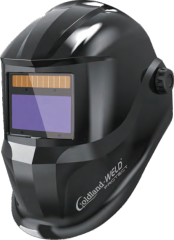
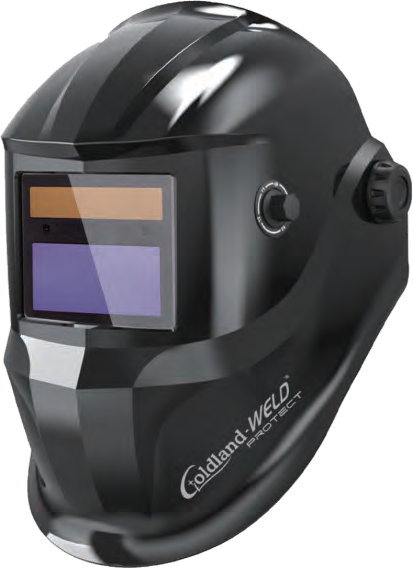
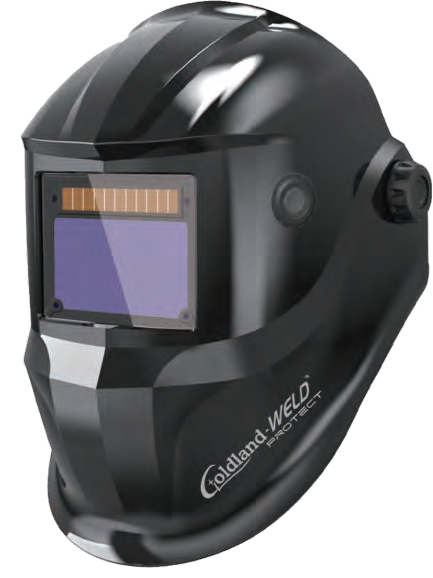
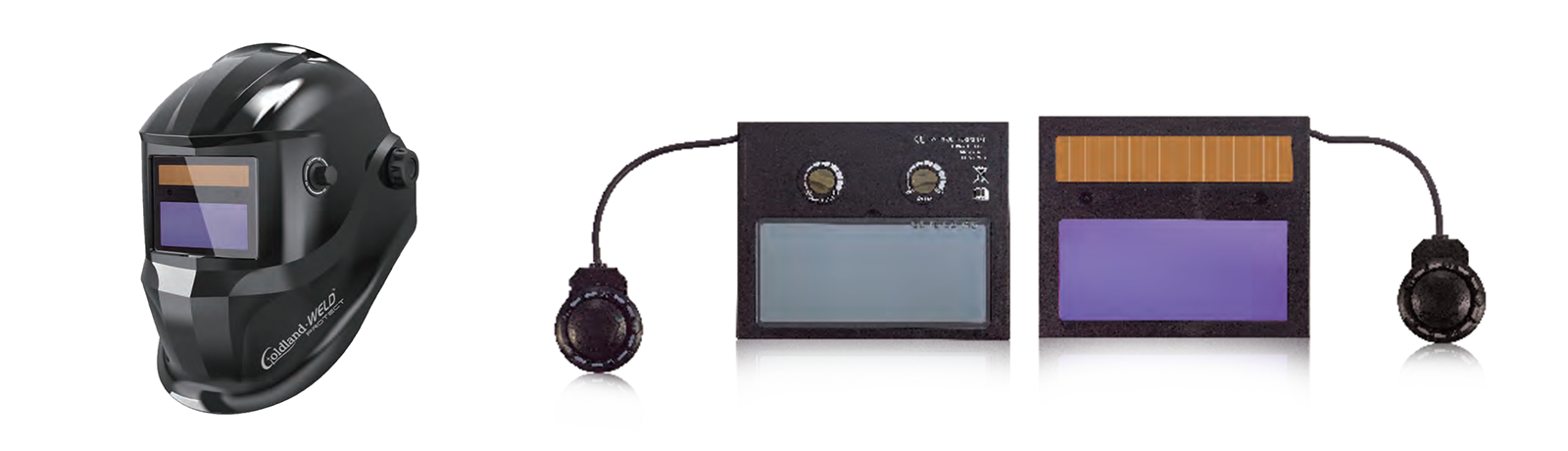
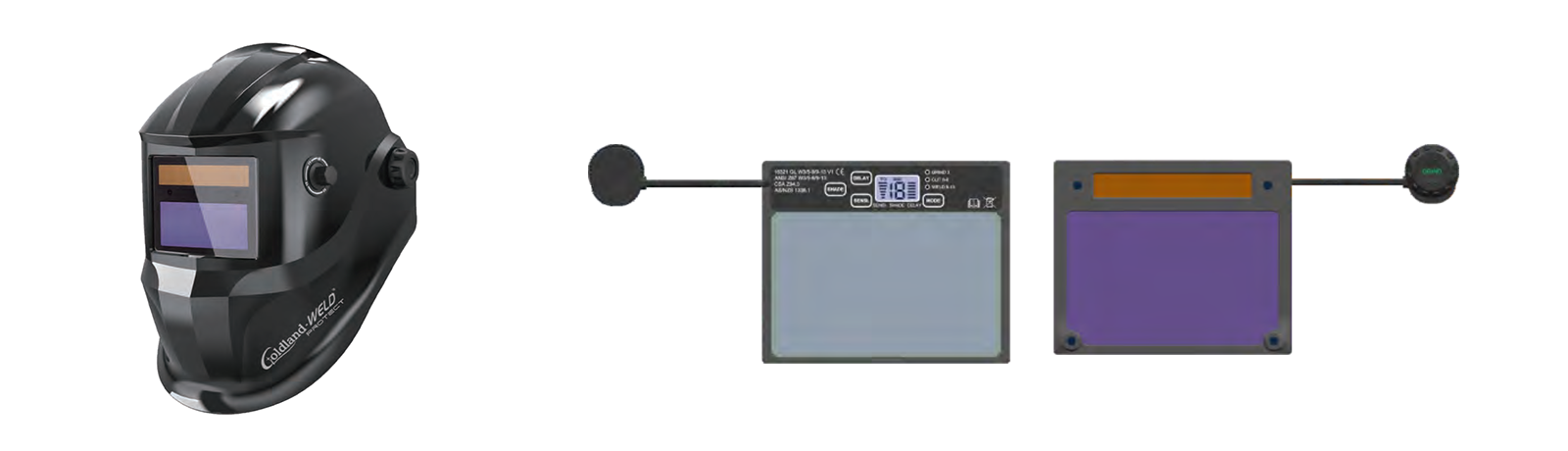
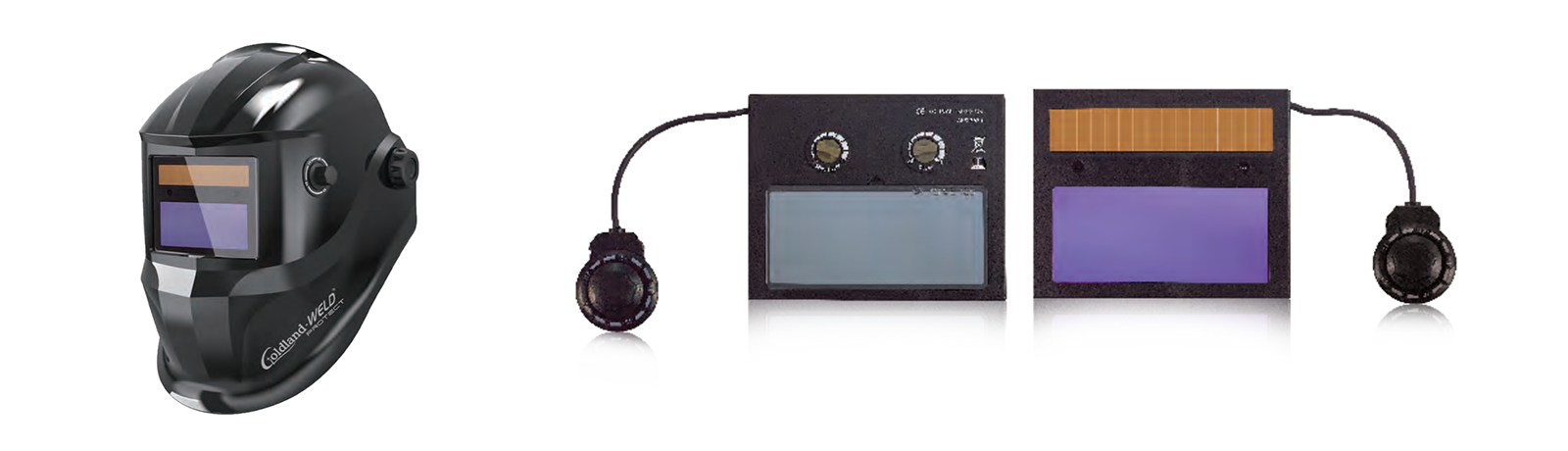
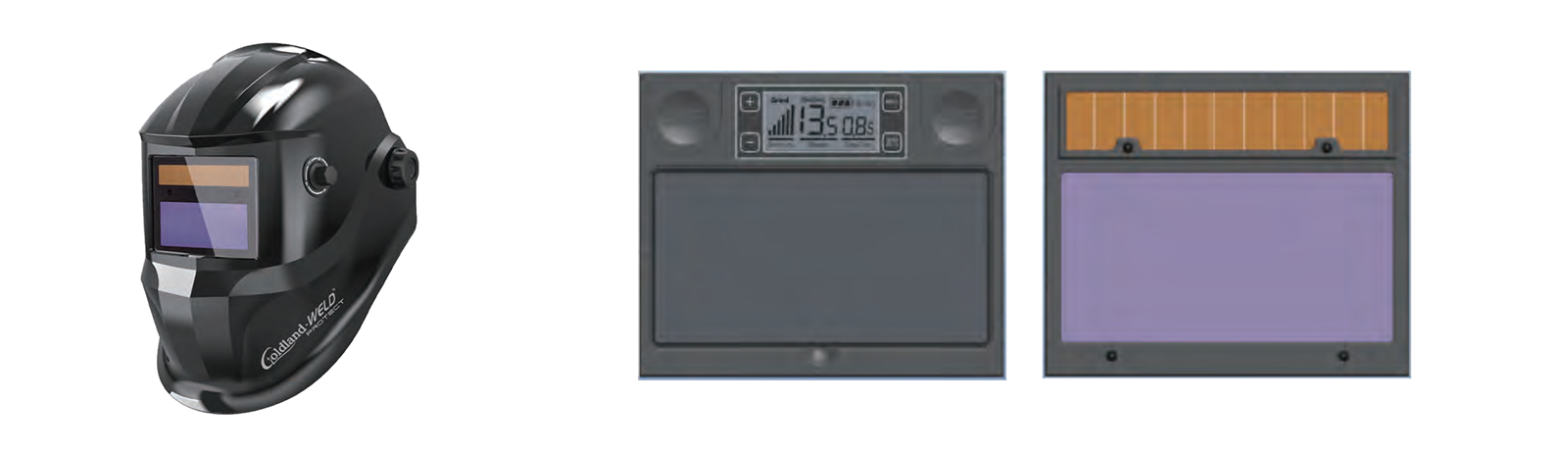
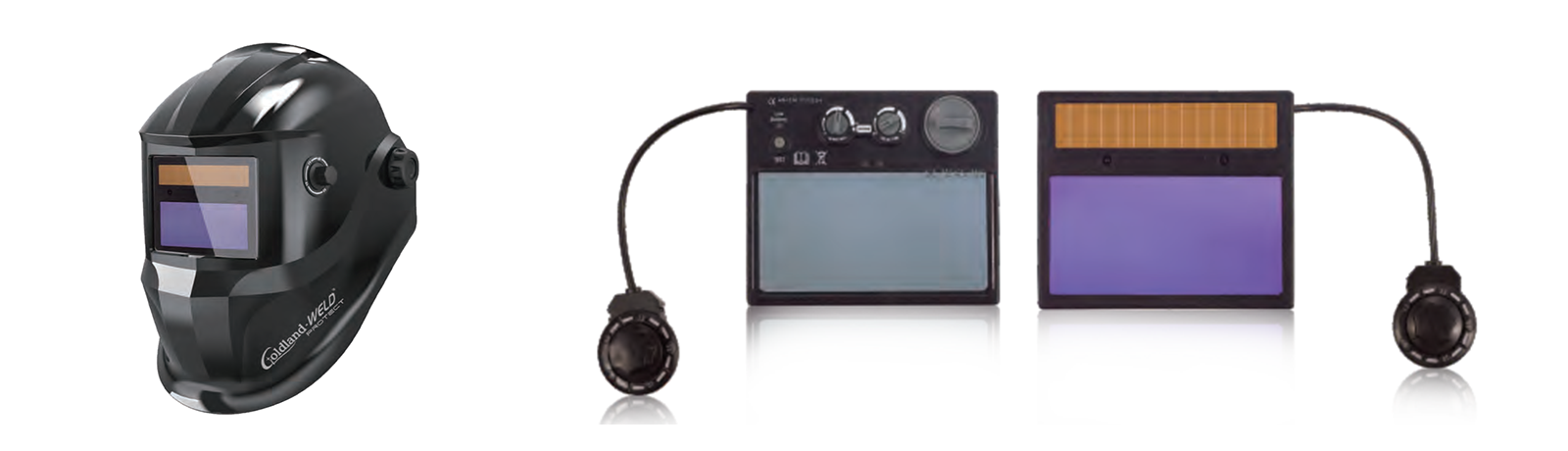
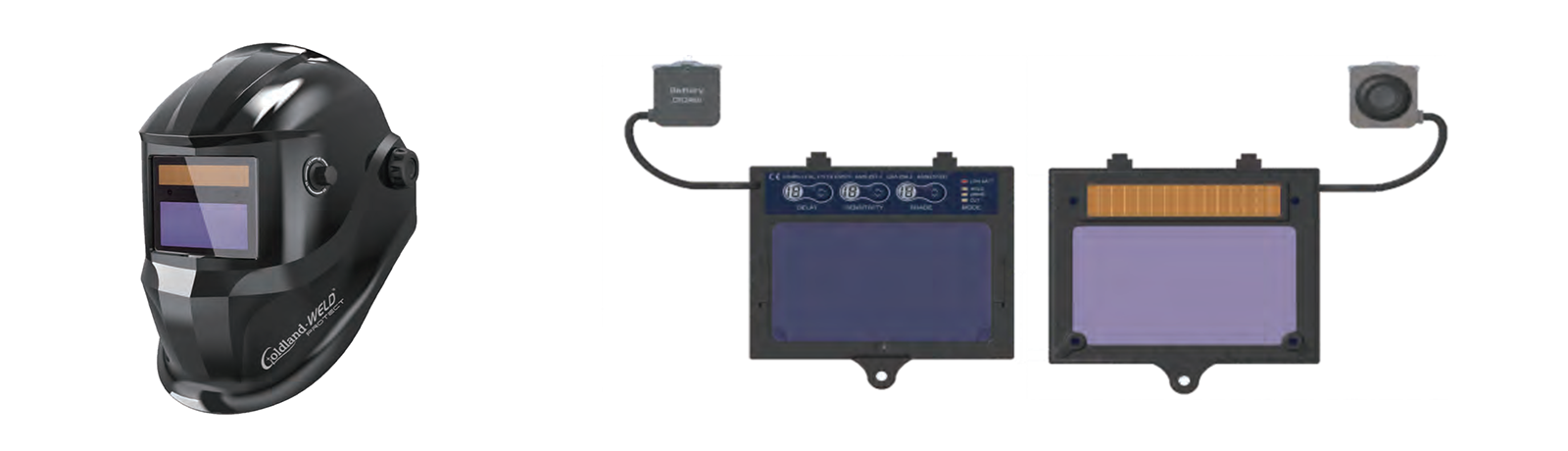
The shell is moulded in PA and finished in a gloss black that hides spatter marks better than a matte texture does. Polyamide was chosen over a thermoset because it takes knocks without cracking around the pivot points — the place where helmets usually fail first — and because it holds a thin, even wall, which is what keeps the finished helmet light. The front of the shell is cut for a single sealed filter cartridge with a solar strip across its top edge, flanked by the sensor windows and the shade dial.
What actually wears out
Three parts take the daily punishment: the outer cover plate over the filter, the headgear, and the shade dial. The cover plate is sacrificial by design, collecting spatter so the filter does not, and a pitted plate should be changed rather than polished, because scratches scatter light into the sensor windows. The filter itself is a sealed unit with nothing inside it to service.
Where the helmet is made
Because we are the welding helmet manufacturers and not a trading house, the shell moulding, the filter assembly and the final test all happen in our own plant in Dongguan. A change of shell colour, logo position or cover-plate print does not sit in a queue behind someone else's tooling, and batch to batch the same mould and the same assembly line produce the helmet.
Where a brand goes
A custom welding helmet programme starts from this shell rather than from a new mould. Your colour, your logo position and your cover-plate print are applied to the same moulding your first sample came from, which keeps both the tooling conversation and the approval process short.
Fit & Wearability
- Balanced close to the head — the filter sits near the face rather than at the end of a long brow, so the shell follows the welder's head instead of lagging behind it when they look along a seam.
- Full coverage without a heavy hood — the PA shell wraps down over the jaw and the throat line, so spatter that comes in low meets the helmet and not the collar.
- Pivots that hold where they are put — the side knobs let the shell rest up on the crown between passes and drop back into place with a nod rather than a hand.
- Air over the brow — the moulding leaves room above the filter, so heat from the arc and from the welder's own breath has somewhere to go instead of fogging the front plate in a cold shop.
- Resets between users — the headgear adjusts to different head sizes, which matters when a helmet is issued by locker rather than by name and changes hands at the start of every shift.
- Familiar to anyone who has worn welding helmets before — the shell shape, the pivot feel and the position of the shade dial are where an experienced welder reaches for them, which shortens the settling-in period on a new issue.
Filter Controls & Settings
- Start clean — wipe the front cover plate, the solar strip and the sensor windows before the first arc of the shift; spatter and dust on the sensors are the usual reason a filter seems slow.
- Set the shade from outside the shell — the dial runs from the light state up through the dark range, so a welder can step from thin sheet to heavy plate without lifting the helmet; write the setting on the headgear when the helmet is shared.
- Use the delay for the cooling weld — a short delay returns the filter to clear quickly for tacking, a longer one keeps it dark while the pool is still bright and the welder is looking back along the seam.
- Lower the sensitivity inside the shell when neighbouring arcs keep triggering the filter — a gentler setting stops the next bay's MIG or a fitter's grinder from flipping the lens while you are not welding.
- Switch grind mode on before the disc goes on — the filter stays light so the cut line and the disc edge stay visible, then it goes back to welding duty when the job changes. Grind mode carries a footnote on our data sheet, so tell us which grinding setup you run and we will confirm how it is enabled on the filter you receive.
- Let the lens look after itself — it comes on when an arc starts and returns to clear when the arc stops, so there is no power switch to leave on or off between jobs.
- Watch the red LED — it lights when roughly two to three days of battery life remain, which is the moment to fit a fresh 3V cell rather than the moment to lose a shift.
- Keep the helmet inside its temperature window — below −10 °C or above +65 °C the filter sits outside the range we specify, so in winter let a cold helmet come up to workshop temperature before the first strike.
Where It Is Used
- General fabrication — MIG on mild steel, stick on the thicker sections and the grinding between them; one helmet follows the welder through the whole day without a change of kit.
- Structural and site work — outdoor light, wind and out-of-position welding where spatter falls toward the face; full-coverage shell shape counts for more here than window size.
- Maintenance and repair — short welds in awkward places, tacking, then inspection; a technician in and out of the helmet twenty times an hour needs one that comes up and settles back easily.
- Training shops and demo bays — many users on one helmet, a shade reset between students, and headgear that adjusts across very different head sizes.
- Tank and confined-space work — crews working inside vessels often pair a welding helmet with respirator protection; our wider range includes PAPR systems, so the helmet and the airflow kit can be planned in one order and shipped together.
- Shared equipment pools — hire fleets, training centres and the welding helmet suppliers who serve them standardise on one model so headgear, cover plates and filters interchange across the whole pool.
Specifications
| Parameter | Value |
|---|
| Model | GL-WH15-1006A |
| Auto filter model | GL-1006A |
| Filter size | 110 × 90 × 9 mm |
| Viewing area | 100 x 50mm |
| Shade control | Light States: DIN 4Dark States: DIN 9 - 13 External Adjustment |
| Switching time | 0.1ms |
| Delay control time | 0.1 - 0.5s |
| Sensitivity and delay control | Internal adjustment |
| Power supply | Internal Adjustment |
| Arc sensors | 4 Arc Sensors |
| Shell material | PA |
| Helmet weight | 485 g |
| CE approval | EN 166 / 175 / 379 CE, ANSI Z87.1, CSA Z94.3, AS / NZS 1337 / 1338 |
| CE optical class | 1/ 1/ 1/ 2 True Color |
WH15 Series Configurations
| Model | Viewing area | Switching time | Delay control | Shade range | Arc sensors | Weight |
|---|
| GL-WH15-1006A | 100 × 50 mm | 0.1 ms | 0.1–0.5 s | DIN 4 / 9–13 | 4 | 495 g |
| GL-WH15-1007M1G | 92 × 41 mm | 0.3 ms | 0.1–0.8 s | DIN 4 / 9–13 | 2 | 480 g |
| GL-WH15-1020A | 100 × 50 mm | 0.08 ms | 0.1–1.9 s | DIN 4 / 5–8.5 and 9–13.5 | 4 | 490 g |
| GL-WH15-1022A | 98 × 62 mm | 0.08 ms | 0.1–1.7 s (L1–L9) | DIN 3 / 5–8 and 9–13 | 4 | — |
| GL-WH15-1034A | 98 × 62 mm | 0.08 ms | 0.1–1 s (6 steps) | DIN 3 / 5–9 and 9–13 | 4 | — |
Custom Programmes & Ordering
- Settle the filter version first — the shell and the headgear are shared across the series, so the filter decides the window size, the sensor count and the weight; everything else follows from that choice.
- Send drawings and artwork for a custom welding helmet — logo file, the position you want it in, the shell colour reference and any cover-plate print; we work to the drawings you provide rather than to a stock template.
- Tell us the destination market — certificates are issued against the exact model and the market it is sold into, so we need to know where the helmets will be sold before the paperwork is assembled.
- Agree the commercial terms with your sales contact — quantity bands, carton and pallet configuration, shipping terms and the delivery window are quoted per order rather than held at one figure, and they move with volume and destination.
- Approve a pre-production piece — for a new brand programme, sign off shell colour and print against a physical unit before the bulk run; ask your sales contact how that approval is arranged.
- Plan the rest of the order together — spare outer cover plates and filters, and where the site requires it a welding helmet with respirator system from our PAPR range, can travel on the same shipment so nothing arrives out of step.
- Line up repeat supply — if the model is going into a catalogue, a tender or a seasonal programme, tell us the volumes you expect across the year so production can be scheduled around them instead of reacting to them.
Testing & Compliance
Compliance is built in, not added at the end. Goldland has produced and exported welding safety equipment since 2005, and our products are tested to the standards our buyers need — CE, ANSI, CSA and AUS/NZ among them, with European personal protective equipment covered under PPE Regulation 2016/425 Module D and certified by Apave. Approval is granted per model, never by extension, so the certificate we issue always matches what you order. Tell us your destination market and how you file documentation, and we will send the matching test reports and certificate copies with your shipment.
FAQ
Q1. What materials are used to make the WH15 auto darkening welding helmet?
The shell is moulded in PA, a polyamide that takes impact without the weight of a thermoset, and the filter is a sealed cartridge with a solar strip along its top edge and a 3V lithium cell behind it. The parts that wear are the outer cover plate over the filter and the headgear; both are separate from the shell and are replaced rather than repaired. It is the same polyamide used across the other welding helmets in the series, so moving between versions does not change the handling a welder is used to.
Q2. Can the WH15 be customised to specific industrial requirements?
Yes. A custom welding helmet in this series usually means choosing the filter that matches your market and then applying your own colour, logo and cover-plate print to the shell. Because the shell moulding is shared across the family, the change is in the finish and the filter, not in the tooling. Tell us the shade range, window size and weight your customers work to and we will point you to the filter that fits before any tooling conversation starts.
Q3. How should I maintain the auto darkening feature?
Treat the front cover plate as the consumable it is: wipe it with a soft cloth and water, never a solvent, and change it once spatter has pitted the surface, because a scratched plate throws light into the sensor windows. Keep the solar strip and both sensor windows uncovered and clean, and store the helmet dry rather than in a damp locker where condensation sits on the filter overnight. Like all auto darkening welding helmets, this one performs most reliably when the sensors have a clear line to the arc.
Q4. Which certifications validate this helmet?
The model on this product carries EN 166 / 175 / 379 CE, ANSI Z87.1, CSA Z94.3 and AS/NZS 1337/1338, with a CE optical class of 1/1/1/2. Certificates are issued against the exact model rather than the series as a whole, so a distributor or one of the welding helmet suppliers filing documentation receives a certificate that matches the helmet on the shelf. Tell us the market you sell into and we will send the matching copies with the order.
Q5. Can the helmet be used with respiratory protection?
This is a welding helmet, not a respirator, and we do not present it as one. Where a permit or a site rule requires airflow, the helmet is worn as part of a PAPR setup rather than relying on the shell alone, and Goldland builds PAPR respiratory protection in the same plant, so a welding helmet with respirator equipment can be specified together and shipped together. Confirm the exact airflow configuration against your site requirement before the order is placed.
Q6. What does the 1/1/1/2 optical class actually mean?
It is four separate measurements rolled into one line: optical clarity, light scattering, homogeneity across the filter, and how much the shade shifts when you look through the lens at an angle. Three of the four sit in the top class and the fourth is one step below it, which is a very readable filter for close work on a seam. Optical class is the shorthand welding helmet manufacturers use to describe a filter in a single line, and it is worth reading alongside the shade range rather than instead of it.
Q7. Can the filter cartridge be replaced if it is damaged?
The filter is a sealed cartridge, and every model in this series shares the same cartridge footprint, so a replacement goes into the same shell and the same headgear. In practice the outer cover plate is the part that needs changing first, since it absorbs the spatter the filter never sees. Tell us the model marked on the helmet you are replacing and we will confirm which cartridge and cover plate to send.