Product Overview
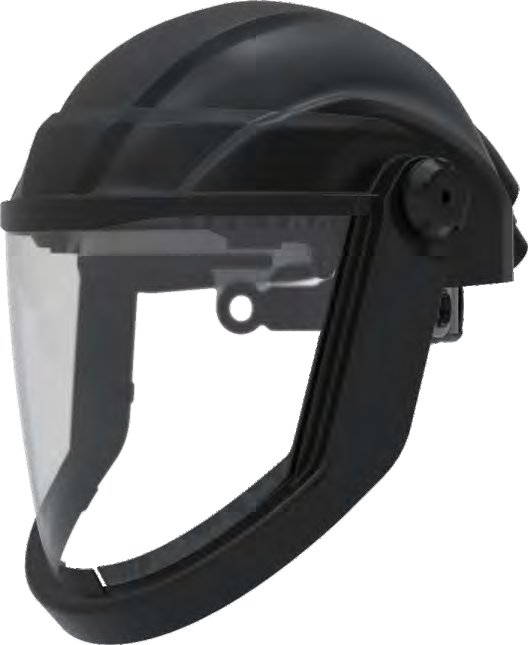
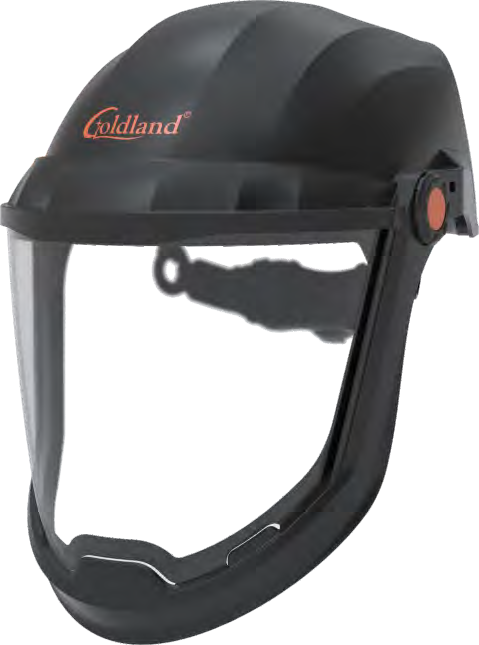
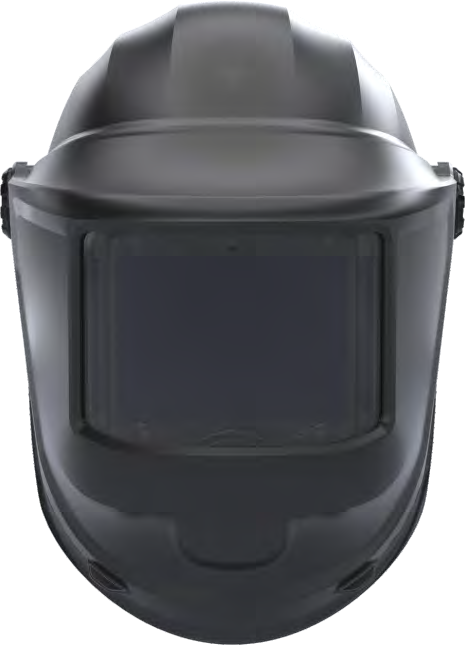
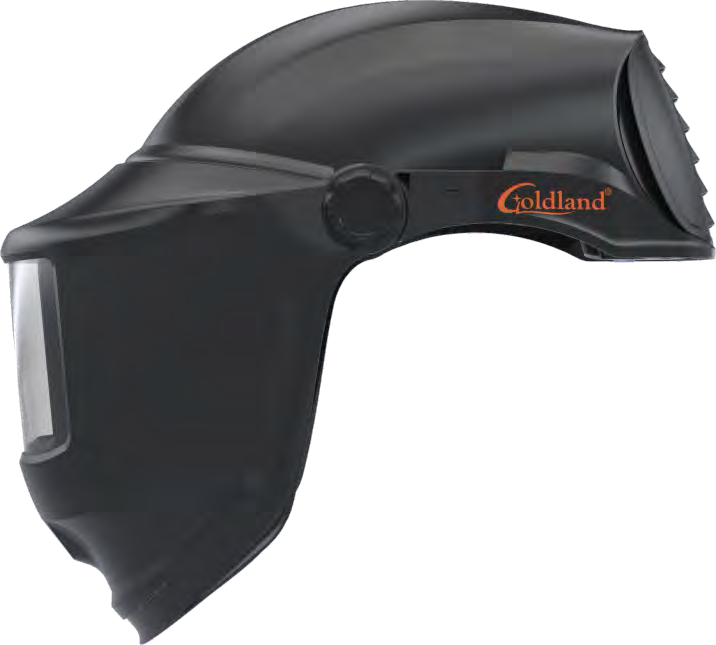
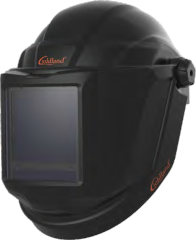
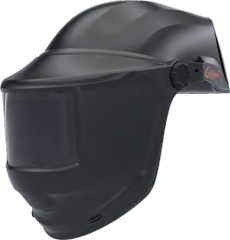
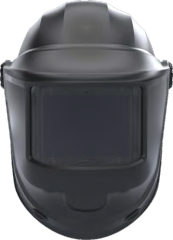
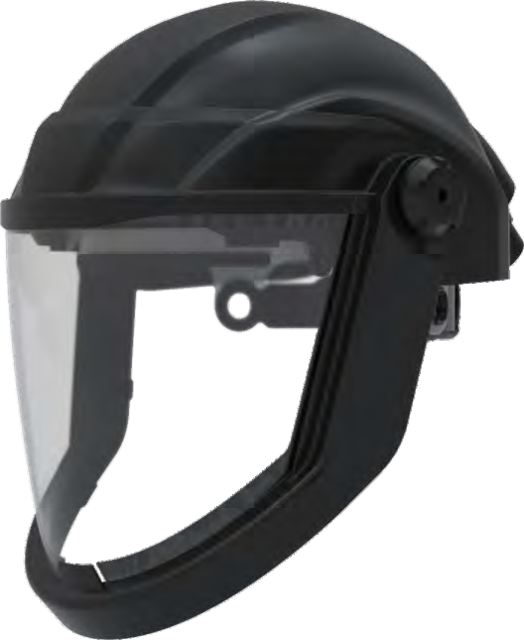
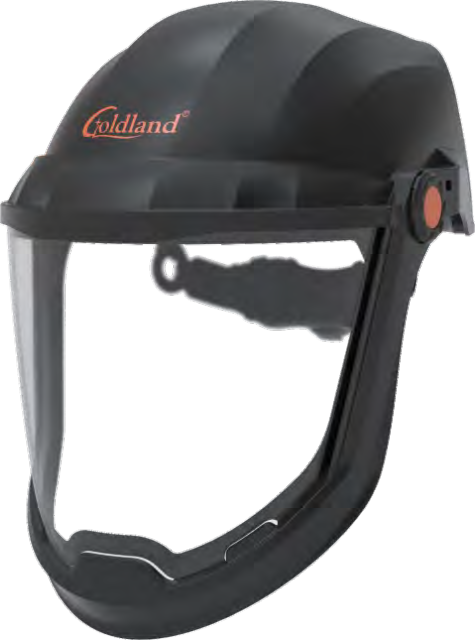
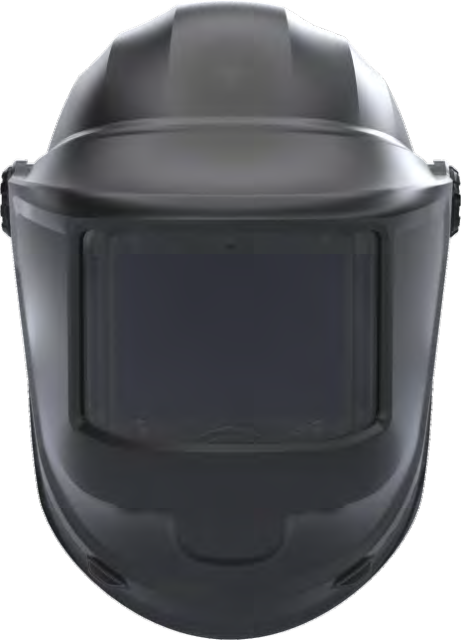
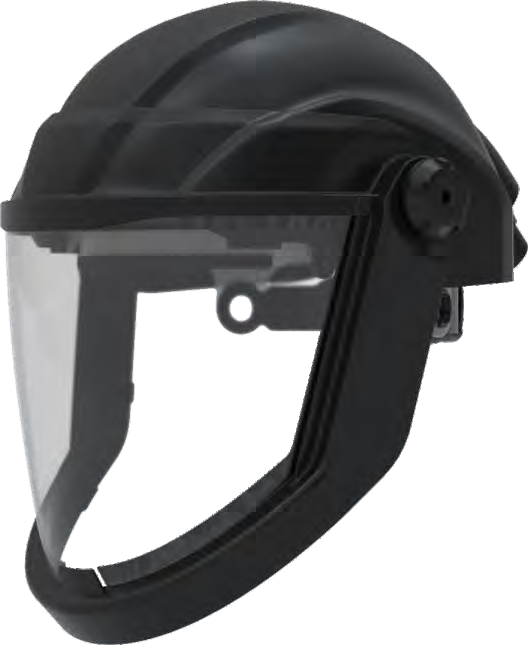
It takes three separate items to protect a welder properly — a hardhat, a face shield and a respirator — and that is three things to fit, check and keep track of before anyone strikes an arc. The Protective Visor Welding Helmet Hardhat with Integrated PAPR puts them together: a helmet shell with a clear full-face visor on side pivot mounts, and a filtered air supply built into the helmet itself.
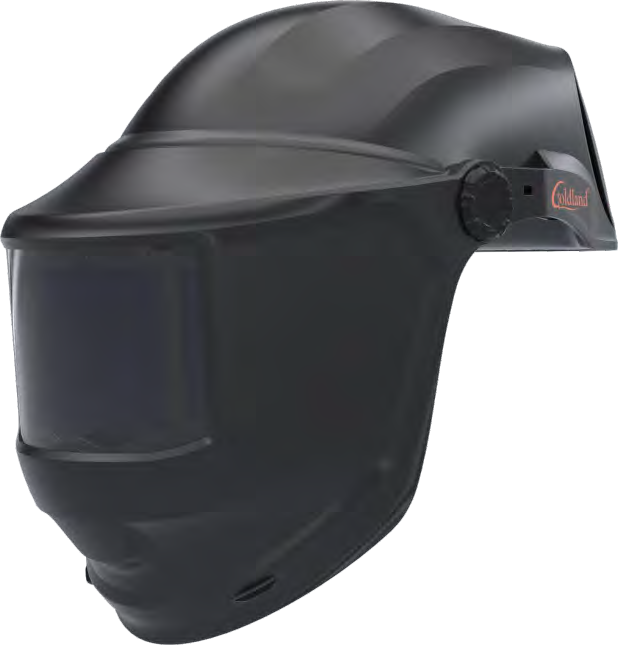
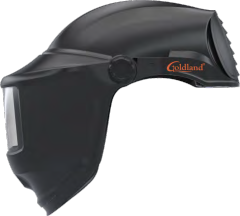
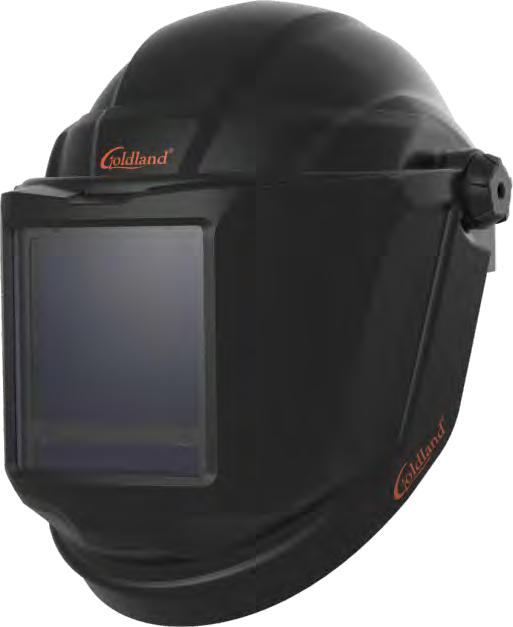
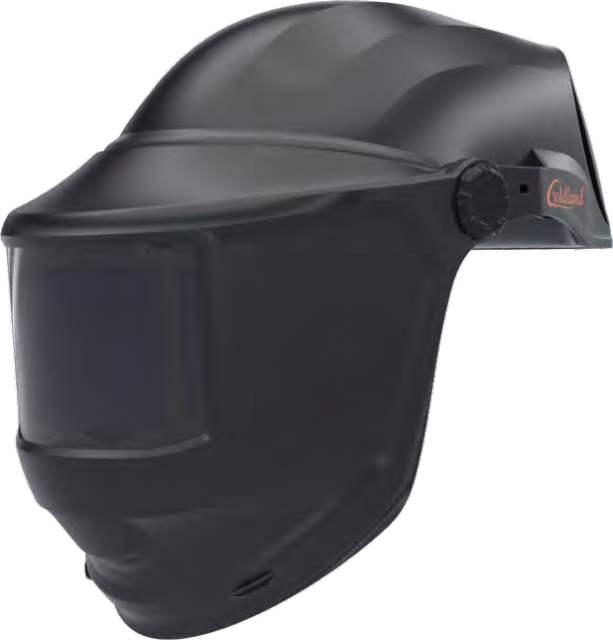
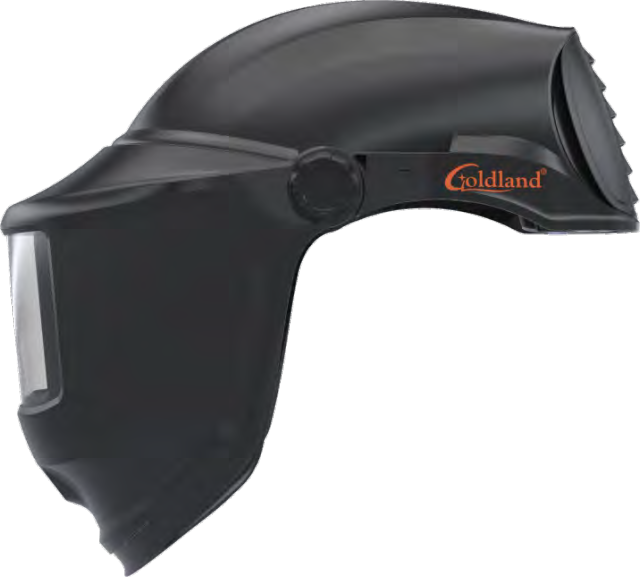
The welder puts the helmet on, switches the air on and works. Filtered air moves inside the visor for the whole shift, the visor swings up when a weld needs inspecting, and the black shell carries Goldland branding and lower ventilation slots so the helmet does not hold stale air between tasks.
We build this model for welding and industrial buyers who judge a PAPR respirator by how it behaves in a real workshop — spatter, grinding dust, awkward positions, long shifts — rather than by a data sheet. It is specified by fabrication shops, plant maintenance teams and site crews working where the air at the face is the problem, and it is the model welding helmet suppliers, brand owners and importers take when they want one line that answers both the respiratory and the head protection requirement.
Integrated Head and Face Protection
- One unit instead of two: the hardhat shell, the protective visor and the air supply are assembled as a single helmet, so there is no separate PAPR respirator mask to fit, seal and clean before every shift.
- Air moving across the face: filtered air runs inside the visor for the whole shift, which cuts the heat and moisture that build up behind a sealed mask and makes the helmet easier to keep on.
- Face and lungs covered in the same piece: the visor takes the spatter, the glare and the impact risk while the air supply handles what the welder would otherwise breathe, so neither protection has to be traded for the other.
- Worn where a hardhat is required: on sites and in plants where head protection is mandatory, the helmet already satisfies that rule — there is no second hardhat to fit over a respirator hood.
- A PAPR hood respirator that follows the head: because the air supply is carried on the helmet rather than on a belt, the unit moves with the welder through overhead, side-on and confined positions without a hose pulling at the face.
- Fewer things to get wrong at the start of a shift: one helmet, one switch and one adjustment, done with gloves on — no second facepiece to seat under the visor before the first weld.
- Shell integrity kept intact: the air path is worked into the helmet's own structure, so adding respiratory protection does not soften the shell or cut into the visor's field of view. - Visor mounting that holds its position: the visor sits on side pivot mounts with an adjustment knob at each side, so it can be set square to the face and stays where it is set. - A complete PAPR respirator system rather than an add-on: filtration and airflow are set by the helmet's own assembly instead of by how well a separate mask happens to fit underneath it. - Weight where it belongs: the powered PAPR respirator is carried in the helmet rather than in a belt pack, so the load stays centered when a welder works overhead or lies on one side. - Designed to pair, not to lock you in: the helmet is built to combine with a range of PAPR units and welding helmet designs, so a buyer is not tied to a single blower or shell combination.
Filtration and Air Supply
The integrated powered air purifying respirator PAPR is rated to deliver up to 500 times cleaner breathing air than the atmosphere around the welder. That margin is why one helmet can be specified across very different conditions: in a shop with moderate fume the filter is working well inside its capacity, and at a confined pipeline joint where the air is thick the same unit still has headroom before the wearer notices any change at all.
Filtration happens at the helmet, before the air reaches the face. The welder breathes air that has been through the filter rather than air pulled in around the edge of a mask, and because the supply runs under light positive pressure the flow at the visor edge moves outward rather than inward. Protection therefore does not depend on how well a face seal happens to sit on a particular wearer at a particular moment of the shift.
This is also what separates a supplied-air helmet from a disposable mask. A mask asks the wearer's lungs to pull every breath through the filter medium, and that effort shows up over a long shift and in heat. Here the blower does the work, so the air arrives ready to breathe and the welder is not managing resistance on top of the job.
Comfort and Wearability
Air that arrives evenly is air the welder stops noticing. The supply is spread across the inside of the visor rather than aimed at one point, so there is no cold spot on the forehead and no steady draft across the eyes — the two things that make a wearer push a helmet up between passes. Because the blower pushes the air, the PAPR respirator mask never asks the wearer to pull a breath through the filter, so breathing stays as easy at the end of a shift as it was at the start.
Fit is what keeps that going. The headgear and the side pivot knobs let one build settle on different head sizes and shapes, and once it is set the helmet stays where it is put — no creeping forward when the welder bends over a joint, no lifting at the back when the visor swings up. Overhead and side-on work are where a badly balanced helmet shows itself first, and it is where a welder is most likely to give up and take it off.
The practical result is wear time. A helmet that is comfortable is a helmet that stays on through the pass, through the grind and through the inspection, and every hour it stays on is an hour of respiratory protection the site did not have to argue for. That is where the productivity case sits too: less time adjusting gear, fewer walks back to the store, and attention that stays on the joint.
1. Set the headgear and the two side pivot knobs before the first shift, so the visor sits square to the face and the helmet does not shift when you tip your head back. 2. Switch the air supply on and let it settle for a moment before lowering the visor, so the flow is established before the first arc. 3. Weld with the visor down and the supply running; because the air keeps moving inside the visor, a PAPR hood respirator stays on the head across the whole pass instead of coming off between beads. 4. For inspection, chipping or a change of setting, swing the visor up on its pivots and leave the helmet where it is. 5. At the end of the shift, switch off and wipe the visor before the helmet goes into the locker, so the next wearer starts with a clear view. 6. Report anything that felt different during the shift — a change in airflow, a visor that would not hold its position, a smell the filter should have caught — so it is looked at before the next use.
Model Range Comparison
Because face and respiratory protection are combined in a single unit, wearers keep both safeguards in place for the whole task instead of juggling separate pieces, which reduces fatigue and makes safety procedures easier to follow. It suits construction sites, manufacturing plants and heavy industrial settings where protective gear has to stay dependable shift after shift.
Welding Operations
- Heavy fabrication bays: several stations under one roof, fume that builds through the shift and spatter coming off the joint — the visor takes the spatter and the airflow keeps the welder's head clear of the plume.
- Pipeline and pressure-vessel welding: the face sits close to the joint and directly over the plume for long stretches, which is exactly where a mask starts to feel like work and where a supplied helmet earns its place.
- Confined and poorly ventilated spaces: tanks, vessels and pits where general ventilation cannot keep up — a PAPR respirator with its own blower and filter does not depend on the room's extraction to keep the wearer protected.
- Repair and maintenance welding: short jobs in awkward positions where fitting a separate respirator takes longer than the weld itself, so an all-in-one helmet is the difference between protection being worn and being skipped.
- Welding next to grinding and cutting: mixed operations put abrasive dust and metal particles into the same air as the fume, and the visor and filter cover both without a change of equipment.
- Breathing resistance stays low, so airflow remains comfortable through long shifts, and the even spread of air helps prevent the eye irritation that less refined systems cause. That comfort means fewer stops for adjustments and more productive time on the job.
- Respiratory risk in a plant rarely comes from welding alone. Maintenance and assembly work throws up airborne dust and aerosols — grinding, cutting, blowing down lines, handling powders, working around conveyors and packaging equipment — and the people doing it are usually the same people who weld. Dust does not announce itself the way fume does, which is why it is so often the exposure that gets under-managed. This helmet covers those tasks with the same unit. The visor takes the face and eye side of the job and the integrated PAPR respirator system takes the inhalation side, so a fitter moving from a weld to a grind and back does not have to walk to the store, swap equipment and start again. Consolidation also changes how the protection is managed. One helmet for welding and dusty maintenance means one issue record, one training brief and one donning procedure, which is far easier to enforce than separate respirator, face shield and hardhat rules that each carry their own checks and their own exceptions.
Specifications
| Product type | Welding helmet with integrated hardhat, full-face visor and air supply |
| Model | AV03 |
| Respiratory system | Integrated PAPR respirator system |
| Particles targeted | Welding smoke, aerosols and dust, including alveolar-penetrating particles |
| Visor | Clear full-face protective visor |
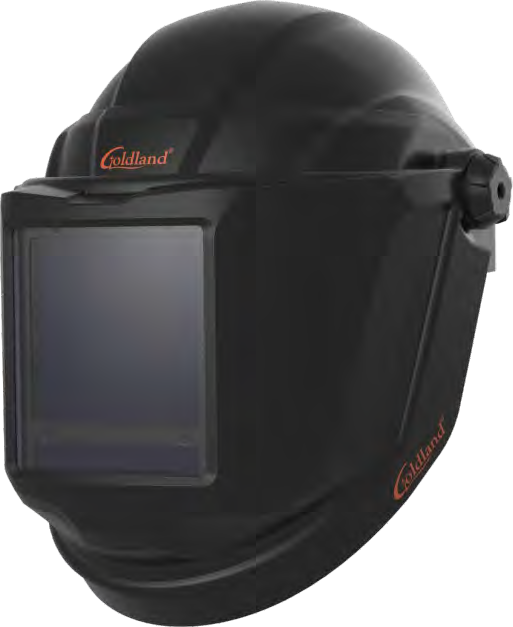
| Shell | Black shell with lower ventilation slots and Goldland branding |
| Viewing | Large rectangular viewing lens in the visor frame |
| Headgear | Integrated headgear |
| Customization | Respiratory protection configurations built to customer drawings |
| Typical users | Welders, fabricators, maintenance technicians and site crews |
Custom Configurations
- Send the drawing and the market requirement — shell, visor configuration, air supply layout, and the standard the finished helmet has to meet where it will be sold.
- We check it against what the build can carry and reply with the configuration we can make, the parts that stay standard, and anything that has to change before tooling.
- Settle the details that affect wearing and branding — visor type, headgear, logo position, how the air path is routed — and confirm them on a build sheet.
- Approve the first build before volume production starts; every later order is made to the same sheet.
- Plan the range, not just the unit: welding helmet suppliers and brand owners generally take this helmet alongside the rest of the respiratory line, so one spare-parts arrangement covers the catalogue.
- Keep the paperwork with the order: as welding helmet manufacturers working to per-model approval, we issue documentation that matches the build actually shipped.
Maintenance and Filter Care
An integrated air supply only stays effective if it is looked after, and the routine is short. Wipe the visor with a soft cloth and a mild detergent solution, clear dust from the outside of the filter housing, and check the air inlet and vents for swarf or spatter. Do not hose the helmet down or immerse the powered section — the shell and visor are wiped, not washed.
The PAPR respirator mask components are the parts that decide whether the unit still delivers what it was specified for, so inspect them on a fixed schedule rather than waiting for performance to drop. Look for a clogged or damaged filter, dust tracking past a seal, and a blower that sounds different from the day it was issued. Replace the filter when inspection shows it loaded or damaged; how often that falls depends on how dirty the workshop air is, so we agree a change interval with each buyer rather than quoting one figure for every site.
Cleaning and inspection are also the cheapest way to extend service life. A helmet that is wiped down and checked weekly outlasts one that is only opened when something goes wrong, and in a fleet of units the difference shows in how long each one stays in service before it has to be replaced.
Ordering and Delivery
- Order quantity: confirm the quantity for the configuration you want — a standard helmet and a build to your own drawing do not necessarily start at the same point.
- Lead time: ask for the current lead time against your quantity and configuration before you commit a delivery date to your own customer.
- Payment terms: confirm the payment terms, currency and any documentary requirements for your market with your sales contact.
- Packing and shipping: tell us how the helmets should be packed and palletized and where they are shipping to, and we will confirm the packing arrangement and shipping terms against it.
- Samples: ask your sales contact about sample availability and the time needed before you place a volume order.
- Build confirmation: send the destination market, the standard the helmet has to meet and the powered air purifying respirator PAPR configuration you need, and we will confirm what can be supplied against it.
- Range planning: if you are one of the welding helmet suppliers building out a respiratory line, tell us the other models you carry and we will confirm how this helmet sits alongside them.
- After-sales route: confirm the warranty terms and the spare-parts route for your market, so both sides know where a filter or a visor comes from in year two.
- Documentation: tell us how you file certificates and test reports and we will supply them in that format with the order.
- One part number instead of three: procurement, issue and stock control run through a single line rather than a hardhat, a face shield and a respirator that each need their own sizes, their own records and their own shelf space. - A build that repeats: every unit is assembled to the same build sheet, so the container that arrives next quarter matches the one that arrived this quarter and a welder is not relearning the fit. - A range rather than a single model: welding helmet suppliers and importers can take this helmet on its own or alongside our other PAPR helmets and respiratory units, so a customer who needs a different shell or airflow requirement can still be served from the same source. - Manufacturing depth behind the build: as welding helmet manufacturers we make the shell, the visor mounting and the air path to fit one another, instead of assembling parts sourced to three different tolerances. - Consumables from the same line: filters and visor parts come from the same production as the helmet, so a reorder brings the right part rather than a near match.
Testing & Compliance
Compliance is built in, not added at the end. Goldland has produced and exported welding safety equipment since 2005, and our products are tested to the standards our buyers need — CE, ANSI, CSA and AUS/NZ among them, with European personal protective equipment covered under PPE Regulation 2016/425 Module D and certified by Apave. Approval is granted per model, never by extension, so the certificate we issue always matches what you order. Tell us your destination market and how you file documentation, and we will send the matching test reports and certificate copies with your shipment.
FAQ
Can this helmet be customized to fit specific safety requirements?
Yes. We build from your drawing or specification rather than from a fixed sheet: shell, visor configuration and the way the air supply is routed can all be set to the job, and the finished unit is built against the standard it has to meet in your market. As welding helmet manufacturers we work to per-model approval, so the configuration you approve is the configuration we document. Send the drawing along with the requirement it has to satisfy and we will come back with what can be built.
What maintenance does the integrated PAPR system need?
Plan it around inspection rather than around failure. Filters, seals and the air path are checked on a fixed schedule, and the filter is replaced when it is loaded or damaged rather than when airflow has dropped enough to notice. Wipe-down happens every shift, and the powered section is never immersed. We agree the inspection interval with each buyer because workshop air quality varies so much between a clean bay and a heavy fume position.
Which industries and work environments benefit most?
Welding and metal fabrication first, because that is where fume, spatter and glare arrive together. Beyond that: plant maintenance and assembly where dust and aerosols are present, pipe and pressure-vessel work, foundries and galvanizing lines, and site work where head protection is also required. The common thread is a work area where general ventilation cannot keep the air clean at the welder's face.
Will it work with the helmets and air units we already stock?
The helmet is built to combine with a range of PAPR units and welding helmet designs rather than to a single fixed pairing, so it can usually be matched to equipment a distributor already carries. Send the model numbers of the blower or PAPR hood respirator you intend to use with it, and we will confirm the combination, the fittings and the documentation before anything goes into production.
How is this different from a separate powered air unit?
A separate unit puts the blower and filter on a belt and delivers air through a hose; here the powered air purifying respirator PAPR is built into the helmet, so there is no hose to route, no pack to put on and nothing to unclip when a welder moves to another bay. The trade-off is that the helmet and the air supply are bought, serviced and replaced together rather than separately, which suits buyers standardizing on one line and less so a site that already runs a large fleet of belt units.
Does the airflow keep the visor clear while welding?
It helps. Moving air inside the visor carries warm, moist exhaled breath away from the lens instead of letting it settle there, which is the usual reason a sealed mask fogs when a welder stops to inspect a bead. Keep the visor clean and the filter in good condition and the view stays clear through a shift. A scratched or heavily contaminated visor will fog regardless of airflow, which is why visor care matters as much as filter care.