WH12 Slide-Up Welding Helmet

The Goldland WH12 is an auto darkening welding helmet with a slide-up lens housing, four arc sensors, and adjustable sensitivity and delay controls. For brands and distributors seeking a custom auto darkening welding helmet, the WH12 platform offers shell colors, branding, and filter configurations to match your requirements.

Auto Darkening weIding HeImet WH12 by Goldland
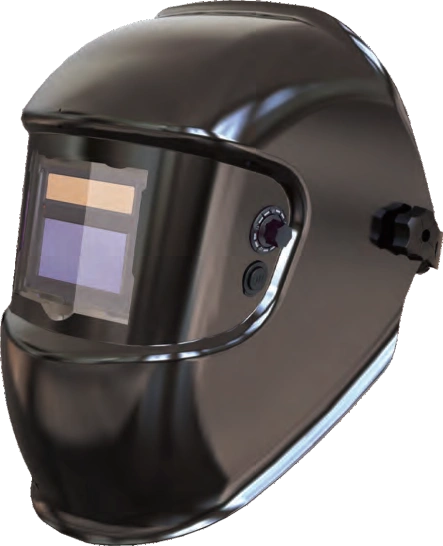
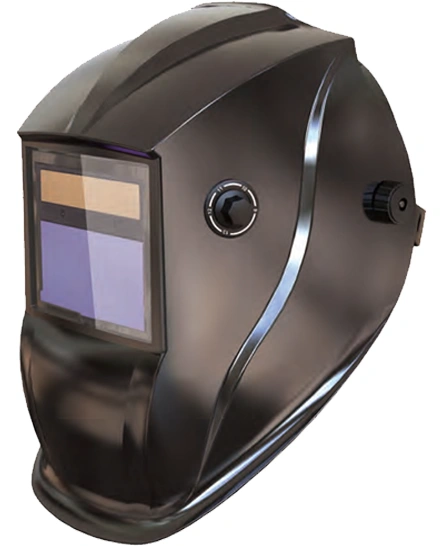
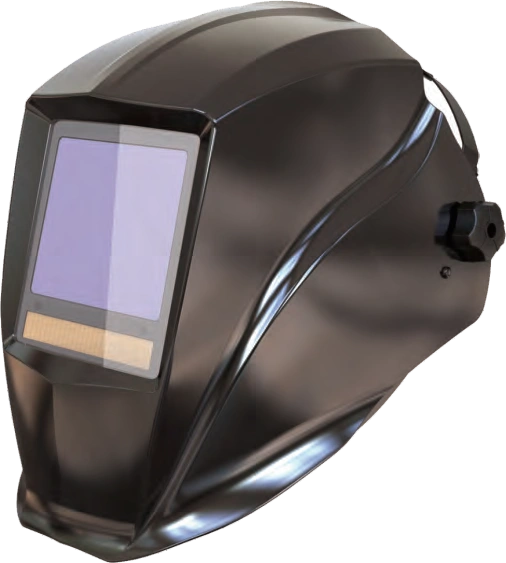
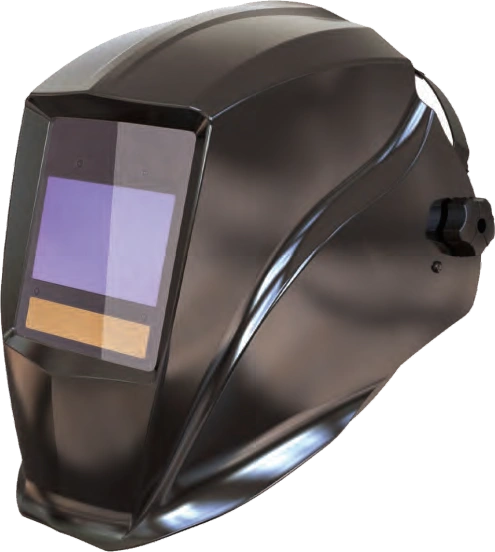
WH12 welding helmet with a gloss black PA shell and slide-up front.
WH12 welding helmet platform by Goldland
WH12 platform shell and headgear with shared lens-cover set.

A Platform Built Around a Slide-Up Lens Housing

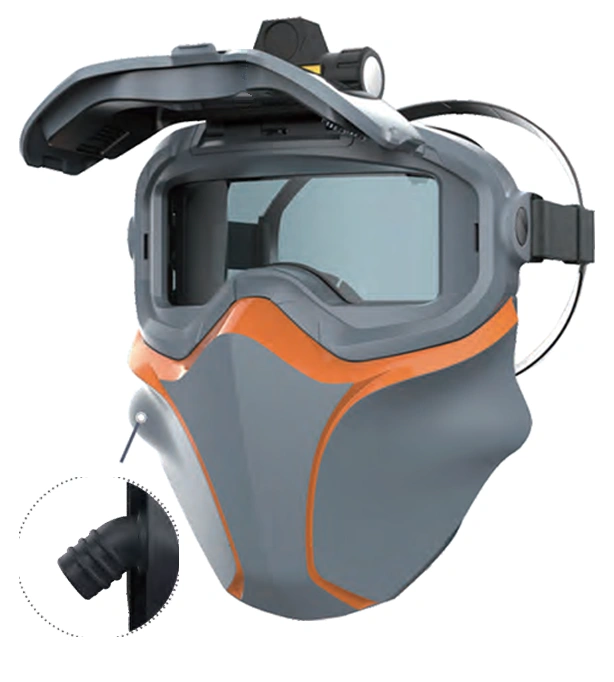
The WH12 uses a PA shell with a mechanical slide-up hinge. The lens housing tips up and out of the line of sight so the welder can check a bead, chip slag, or measure a joint without removing the helmet. Four arc sensors around the window support arc detection, and grind mode switches darkening off so the lens stays light during grinding.

Inside the shell, sensitivity and delay controls set the trigger threshold and hold time. The solar-assisted filter keeps working outdoors with sunlight and runs on cells indoors, with a red LED indicator that gives roughly two to three days’ notice before battery replacement.

  • One PA shell, one headgear, and one lens-cover set sit behind six filter options with shared spares.
  • Side pivot knobs set the shell angle, while the headgear spreads load across the crown and back of the head.
  • Goldland describes True Color and top optical scores as making the weld pool easier to read.
  • The shell sits clear of the face, which the design links to reduced fogging and fatigue.

WH12 Specifications at a Glance

Core product details for the WH12 platform.

Model GL-WH12
Shell material PA
Finish Gloss black, silver accent strip, gold line under the window
Sensors Four arc sensors around the window
Adjustment Side pivot knobs set the shell angle
Power Solar-assisted filter; CR2450 cells; red LED battery indicator
Filter options Six configurations claimed in the range
Platform components One PA shell, one headgear, and one lens-cover set behind six filter options, with shared spares

Choosing the Right Filter Configuration

The WH12 is designed as a platform, so the shell and headgear can stay consistent while the filter is selected for the work.

GL-1008B

A practical choice for general MIG and stick work, with a 97 × 61 mm viewing area.

  • Filter size: 114 × 133 × 10 mm
  • Light / dark states: DIN 4 / DIN 5–8, 9–13
  • Switching time: 0.1 ms
  • Power supply: Solar + CR2450 × 2
  • Typical use: General MIG and stick

GL-1027A

A wider 100 × 93 mm viewing area for inspection work where visibility across the window matters.

  • Filter size: 114 × 133 × 10 mm
  • Light / dark states: DIN 3 / DIN 5–8, 9–13
  • Switching time: 0.08 ms
  • Power supply: Solar + CR2450 × 1
  • Typical use: Wide-window inspection work

GL-1026B

The GL-1026B is listed with a 114 × 133 × 10 mm filter size and 100 × 93 mm viewing area.

  • Light state: DIN 4
  • Published detail: The shade range is shown only as DIN 4 / DI…
  • Before ordering: Confirm shade range, switching time, and power supply

Where the WH12 Fits on the Job

The slide-up housing and filter range support several working moments without removing the helmet.

Welding

Four arc sensors around the window support arc detection. Internal sensitivity and delay controls let the welder set the trigger threshold and hold time inside the shell.

Grinding

Grind mode switches darkening off so the lens stays light during grinding. The slide-up housing also helps when the task changes from welding to inspection.

Inspection and Fit-Up

The lens housing tips up and out of the line of sight to check a bead, chip slag, or measure a joint without removing the helmet. The GL-1027A is listed for wide-window inspection work.

Custom Brand Programs

Custom shell designs are available, with colour, markings, and filter combination able to follow a customer drawing. Shared spares support a platform-based range.

Details to Confirm Before Ordering

These checkpoints help turn the WH12 platform into a clear order for your team or brand.

  • Filter model: Choose among the six filter configurations and confirm shade range, viewing area, switching time, and power supply for the exact model. The GL-1008B and GL-1027A publish complete rows; the GL-1026B needs confirmation because its published row is incomplete.
  • Battery routine: The platform uses CR2450 cells and a red LED battery indicator. The GL-1008B uses two CR2450 cells, while the GL-1027A uses one.
  • Shell design: Confirm colour, markings, and filter combination if the shell needs to follow a customer drawing.
  • Shared spares: One PA shell, one headgear, and one lens-cover set sit behind six filter options with shared spares; confirm the spare parts needed for your chosen build.
  • Intended use: Confirm whether the helmet is intended for general MIG and stick work, wide-window inspection work, or a mix of welding, grinding, and inspection.

Build the WH12 Around Your Workflow

Send your filter choice, shell design requirements, and quantity to Goldland to discuss the right WH12 configuration.

Related Reading

Three notes to help clarify product requirements before contacting the supplier.

Using a Slide-Up Lens Housing Between Welding, Grinding, and Inspection

A slide-up lens housing turns the stop between welding passes into a quick mechanical action instead of a helmet-off break.

Read article

How to Choose a Custom Auto Darkening Welding Helmet Platform

A custom auto darkening welding helmet platform starts with a quote-ready brief that defines shell appearance, marking artwork, filter mix, sample inputs, and the SKU plan behind the brand.

Read article

Welding Helmet OEM Supply for Distributor Product Lines

Distributors building a tiered range of auto darkening welding helmets need a shell platform that can carry several filter tiers, shared wear parts, and clear OEM terms.

Read article

Frequently Asked Questions

what makes the wh12 different from a standard welding helmet?

the wh12 is built around a pa shell with a mechanical slide-up lens housing. the housing tips up and out of the line of sight so the welder can check a bead, chip slag, or measure a joint without removing the helmet. four arc sensors around the window support arc detection.

how does grind mode work on the wh12?

grind mode switches darkening off so the lens stays light during grinding. sensitivity and delay controls are set inside the shell, where they adjust the trigger threshold and hold time for welding.

how is the wh12 filter powered?

the filter is solar-assisted. outdoor work keeps the filter topped up, indoor work runs on cr2450 cells, and a red led indicator gives roughly two to three days’ notice before battery replacement. the gl-1008b uses two cr2450 cells, while the gl-1027a uses one.

which filters are available for the wh12 platform?

the wh12 platform places one pa shell, one headgear, and one lens-cover set behind six filter options with shared spares. published examples include the gl-1008b for general mig and stick work and the gl-1027a for wide-window inspection work. the gl-1026b is also listed, but its published row is incomplete, so confirm its full details before ordering.

can the wh12 shell be customized for our brand?

yes. custom shell designs are available, and colour, markings, and filter combination can follow a customer drawing. the platform approach keeps one shell, one headgear, and one lens-cover set behind the six filter options, with shared spares.

what should i confirm before ordering a wh12?

confirm the exact filter model, shade range, viewing area, switching time, and power supply. also confirm the shell design, the intended use such as general mig and stick or wide-window inspection, and the shared spare parts for your chosen configuration.

Leave a message
Name *
Email *
Message *
Verification code *
Click to verify
We use Cookie to improve your online experience. By continuing browsing this website, we assume you agree our use of Cookie.